
In Bosnia and Herzegovina, adolescent girls from marginalised communities, particularly Roma communities, face a high risk of violence, exploitation and school dropout. Many leave school at an early age, are pushed into arranged child marriages and experience physical, psychological, sexual and digital violence. These risks intensify during adolescence, as poverty, social exclusion and discriminatory gender norms severely limit access to education, protection and support. In some cases, girls are also affected by human trafficking.
The aim of the project is to create a safer environment for adolescent girls and to strengthen their ability to protect themselves effectively against gender-based violence, abuse and exploitation, including in the digital sphere.
The project targets girls aged 13 to 19 in the Tuzla region as well as in the rural municipalities of Kiseljak and Cilijuge. It combines individual support with educational and prevention activities to help girls complete compulsory education, facilitate the transition to secondary school and support realistic career orientation. In addition, girls receive age-appropriate information on violence prevention, protection from exploitation and child marriage, as well as on how to claim their rights. Cases of violence are referred to specialised services through established protection mechanisms.
At the same time, the project operates at community and institutional level. Awareness-raising activities and capacity-building measures strengthen local actors in education, social work and healthcare. Peer education programmes empower young people to recognise and prevent violence, critically reflect on gender norms and share knowledge on sexual and reproductive health. In addition, young female journalists and media professionals receive training on how to address gender-based violence in a responsible, factual and non-discriminatory manner. Advocacy activities aim to strengthen the effective implementation of existing protection measures in education, health and social services.
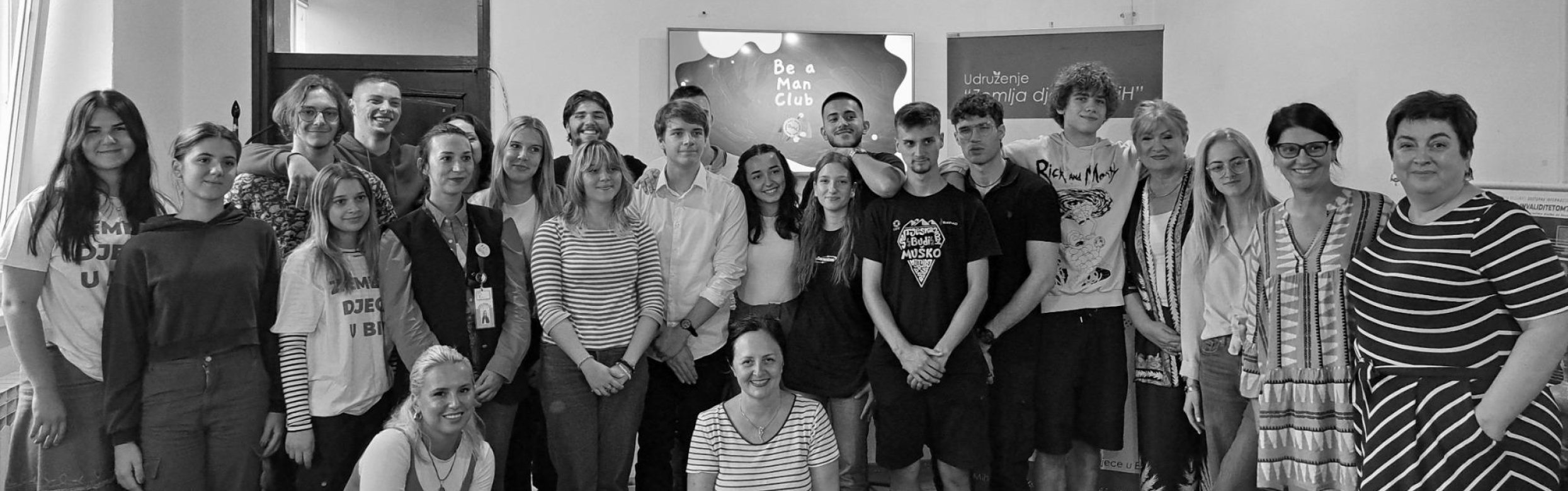
A particular focus is placed on engaging male adolescents from Roma communities. Through so-called “Boys’ Days”, they reflect on gender roles, violence prevention and responsibility. Parents, teachers, social workers and local decision-makers are also actively involved in order to create a protective and sustainable environment for girls.
Each year, the project directly benefits approximately 80–100 adolescent girls and young women, 240 parents, 60 peer educators, 160 secondary school students, 180 boys, 24 young female journalists, as well as local decision-makers.
Partner organisation
Zemlja Djece
Project phase
1.1.2025 to 31.12.2027
Support the people in our projects with a donation! Thank you.
Donate now
